In short: Transparent vinyl is a flexible, cost-effective material well suited to specific applications like storefronts and vehicle glass, but it's not a substitute for rigid materials in every project. Understanding its strengths and limits saves unnecessary time and cost.
What is transparent vinyl?
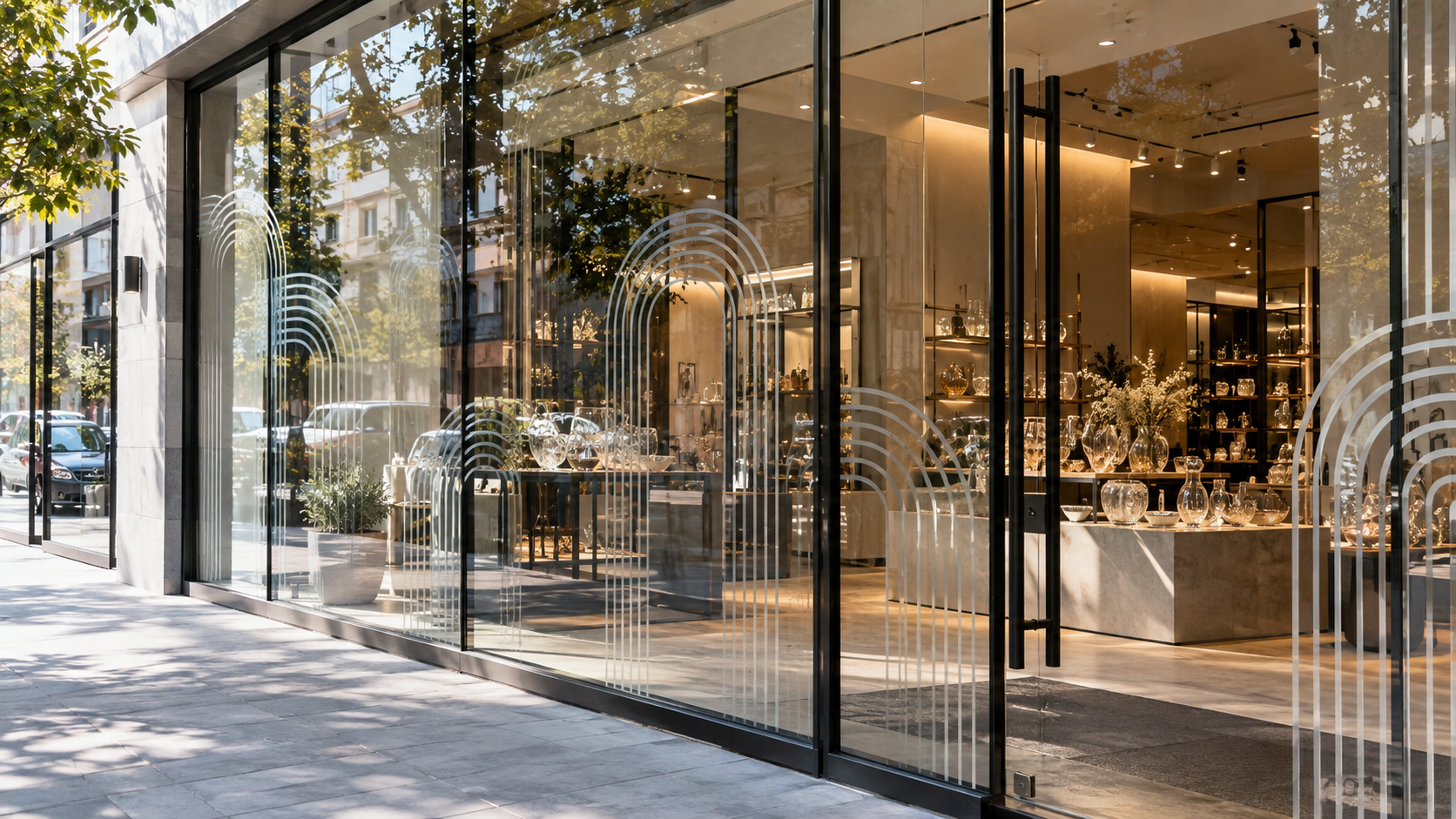
Transparent vinyl is a thin, flexible adhesive film printed with a design and then applied to a clear or glass surface, giving the impression the design sits directly on the glass itself with no white backing blocking the view from the other side. This makes it a popular choice for storefronts that need to stay transparent while still carrying a clear visual identity.
Common uses of transparent vinyl in advertising
Among its most common uses: glass storefronts (a logo or promotion on the glass without blocking the interior view), vehicle windows and display cases, product labels on clear packaging, and some exhibition setups that need a transparent touch instead of a traditional white background.
Advantages that make it a popular choice
Cost is relatively lower than rigid materials like acrylic, installation is fast and flexible (it can be applied to simple curved surfaces), the result preserves the surface's original transparency, and it's a lightweight material that doesn't need complex installation setup.
Disadvantages and limits to consider
Lifespan in areas exposed to direct sunlight is shorter than rigid materials, and colors can fade over time without an adequate protective layer. Vinyl also isn't suited to surfaces that need a three-dimensional premium feel or noticeable thickness, and it requires a perfectly clean surface at installation so parts of it don't lose adhesion over time.
Transparent vinyl versus other alternatives
Compared to clear acrylic, vinyl is cheaper and faster to install but less durable with a shorter lifespan. Compared to standard (non-transparent) stickers, it gives a more professional look in places where transparency is part of the design itself, not just a decorative choice.
When to choose transparent vinyl for your project
If your project needs a fast, economical solution for a glass storefront or clear surface for a medium term (roughly one to two years depending on sun exposure), vinyl is a sensible choice. If the project needs a long-term permanent solution or a premium look with noticeable thickness, it's worth reviewing alternatives like acrylic.
Get a vinyl consultation from Art Zone
Send us your surface details, location, and expected duration of use, and we'll recommend the right material and design for your project. Reach us at 01115404818 or via our contact page, or see real examples in our portfolio.